Mayor Wright Homes Breaks Ground on 2,400-Unit Honolulu Redevelopment
State officials launched the largest public housing project in Hawaii history on Thursday, aiming to replace a 75-year-old complex with mixed-income towers in Kalihi-Palama.
By Gabriela Flores ·
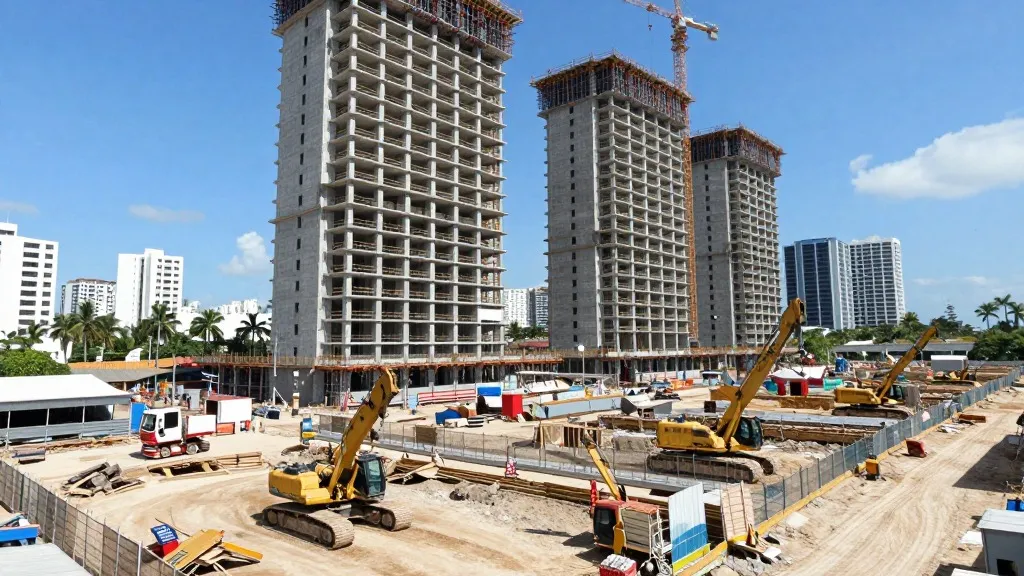
The first shovel went into the Kalihi-Palama dirt on Thursday, marking the official start of construction for the largest public housing redevelopment in the state’s history. This momentous step initiates the transformation of the aging Mayor Wright Homes complex, a project that state leaders are positioning as a cornerstone for the future of Honolulu’s housing landscape. The ceremony brought together government officials and community stakeholders to witness the start of Phase 1, a milestone that signals a departure from decades of incremental improvements in public housing policy.
The numbers behind this initiative are substantial. The plan calls for the construction of more than 2,400 new rental homes, ranging from studio apartments to five-bedroom units. These residences will be distributed across ten towers on the 15-acre site. The development strategy explicitly targets a mix of incomes, a significant shift from the previous model that served only very low-income residents. More than half of the new units will be reserved for tenants earning less than 80% of the area median income, while later phases will accommodate households earning up to 100% of that threshold.
Key figures in the housing and development sectors attended the groundbreaking to underscore the project's significance. Hakim Ouansafi, the executive director of the Hawai‘i Public Housing Authority, framed the event as a symbolic and practical breakthrough. "It's not simply about breaking ground. It is about breaking barriers," Ouansafi stated. He emphasized that the state can no longer rely on past approaches to solve its ongoing housing challenges. Moe Mohanna, president of developer Highridge Costa, also spoke about the scale of the undertaking. "What we are building here is a legacy," Mohanna said, praising the state for accepting such a large initiative.
The site, bounded by King Street, Liliha Street, and Vineyard Boulevard near downtown Honolulu, currently houses a complex that is nearly 75 years old. The Hawai‘i Public Housing Authority and Highridge Costa are replacing this infrastructure with a modern mixed-use development. In addition to the residential towers, the project includes condominiums for sale, commercial space, and four acres of public parks and recreational areas. The design places the development within walking distance of the planned Iwilei rail station, integrating housing with future transit infrastructure.
The financial scope of the project reflects its ambition. The housing authority estimates the cost of Phase 1A at $333 million. A broader 2017 state estimate placed the total cost for the entire redevelopment at $1.3 billion. These figures highlight the massive capital investment required to modernize public housing stock. The timeline is equally long, with the full redevelopment expected to take 15 years to complete. The first building is scheduled to open in 2029, providing a concrete near-term target for the long-term process.
Political leaders linked the project to broader state goals. Gov. Josh Green described the development as central to the state's housing strategy. "Housing provides health," Green said, noting that stable housing allows residents to focus on education, food security, and health care. Honolulu Mayor Rick Blangiardi tied the project to the arrival of the Skyline rail line, calling the combination historic and unprecedented for affordable housing. The collaboration between state and city leaders suggests a unified approach to addressing the housing crisis in the capital region.
The social impact of the project is a key focus for organizers. The new development will serve a mix of incomes rather than only very low-income residents, a design choice intended to create more diverse communities. Ouansafi argued that residents deserve safe, modern homes in areas where poverty is not concentrated. "Public housing should never mean second class housing," he said. This philosophy underpins the decision to integrate commercial space and recreational areas, aiming to create a self-sustaining neighborhood rather than an isolated housing block.
Current residents of the Mayor Wright complex are at the center of this transition. Displaced residents are being relocated during the construction period and will have priority to return to the new units. This relocation process is a critical logistical and social challenge for the developers and the housing authority. The project aims to maintain continuity for existing tenants while upgrading the physical infrastructure. The inclusion of public housing units within the mixed-income model ensures that those with the lowest incomes remain a central part of the community.
The redevelopment represents a long-term commitment to solving one of the state's most pressing issues. With the first building slated for 2029, the project will span multiple election cycles and economic shifts. The 15-year timeline allows for phased construction, reducing immediate disruption while progressing toward the full vision. The integration of the project with the Iwilei rail station further enhances its long-term viability. The success of this initiative will be measured not just in square footage, but in the stability and quality of life provided to thousands of families over the next decade and beyond.
Source: Hawaii News Now